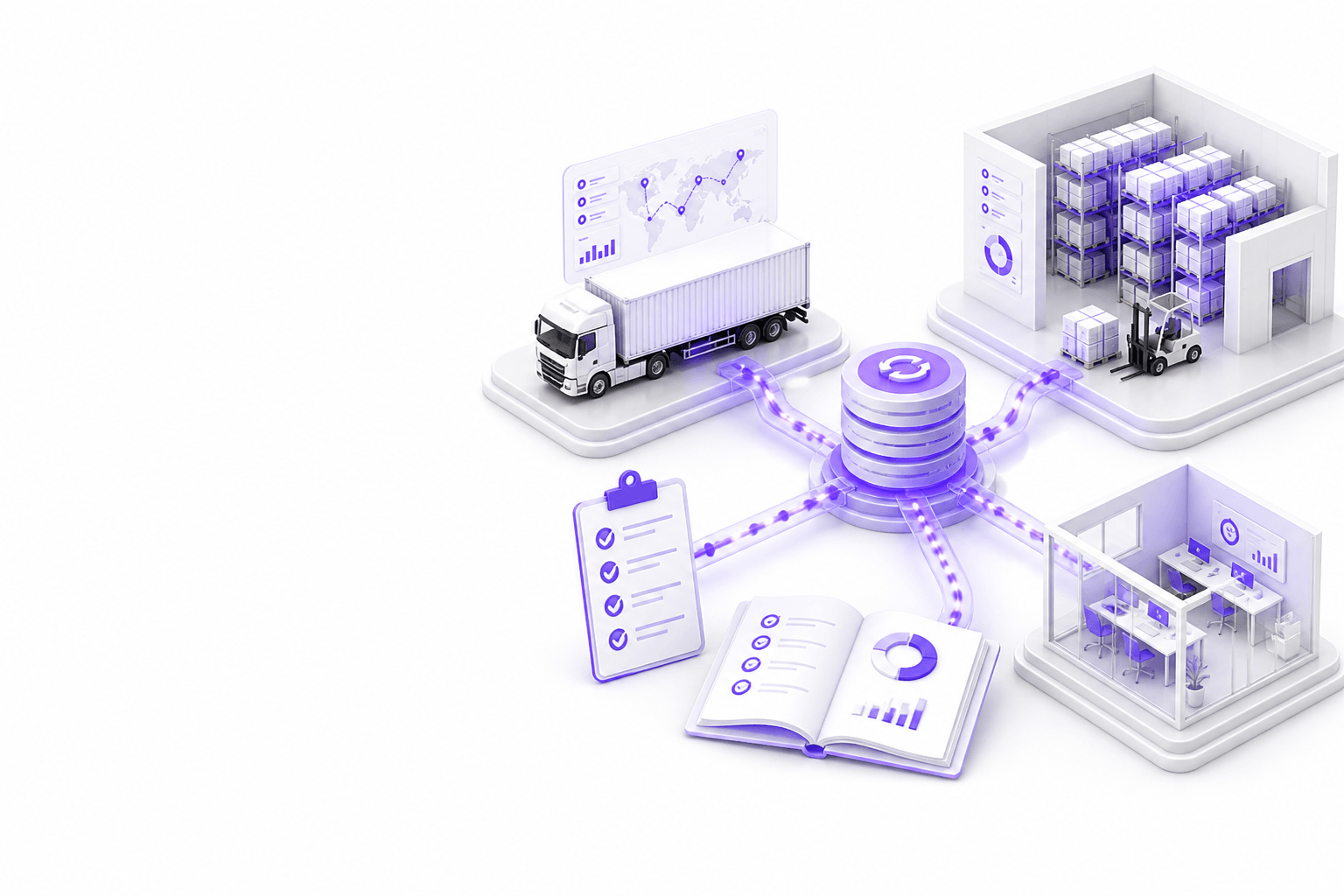
ملخص الدليل
تحقق من ملكية الأنظمة وsource of truth لكل كيان، وخيارات API والملفات مع عينات sandbox، ومحاذاة البيانات الرئيسية، وأحداث shipment/order/stock مع idempotency، والحجر والإعادة، والمصادقة والتدقيق، وharness اختبار، ومراقبة الإنتاج، وبديل يدوي موثق.
- مالك واحد لكل كيان: تجنب masters مزدوجة
- نموذج أولي على عينات EDI وXML وCSV وSFTP أو API حقيقية
- حجر مع أدوات إصلاح للمشغلين
- راقب التأخير والأخطاء والمطابقة يوميًا
- وثّق rollback قبل cutover موسم الذروة
إجابة مباشرة
ماذا يجب التحقق منه قبل تكامل TMS وWMS وERP؟
تحقق من ملكية الأنظمة وsource of truth لكل كيان، وخيارات API والملفات مع عينات sandbox، ومحاذاة البيانات الرئيسية، وأحداث shipment/order/stock مع idempotency، والحجر والإعادة، والمصادقة والتدقيق، وharness اختبار، ومراقبة الإنتاج، وبديل يدوي موثق.
- مالك واحد لكل كيان: تجنب masters مزدوجة
- نموذج أولي على عينات EDI وXML وCSV وSFTP أو API حقيقية
- حجر مع أدوات إصلاح للمشغلين
- راقب التأخير والأخطاء والمطابقة يوميًا
- وثّق rollback قبل cutover موسم الذروة
System ownership
Every integration argument starts with ownership. Decide which system creates, updates, and archives shipments, orders, inventory, charges, and documents before mapping fields.
- Assign owner system per entity: shipment, order, line, stock, charge
- Document read-only vs read-write roles for each connected system
- Identify legacy systems that cannot be replaced in phase one
- Confirm vendor contacts and upgrade windows for TMS, WMS, ERP
- Align ownership with finance and operations leadership
- Record decisions in architecture doc accessible to support teams
- Review ownership when adding portals or automation layers
Source of truth
Source of truth defines which status, quantity, or charge is authoritative when systems disagree. Without it, portals and towers show conflicting answers.
- Define authoritative milestone set for for customers status
- Specify which inventory figure WMS vs ERP reports externally
- Document charge calculation owner: TMS, ERP, or middleware
- Plan conflict resolution when feeds disagree
- Set freshness SLA per data type for downstream consumers
- Avoid copying master data into multiple writable stores
- Validate truth rules with customer service and dispatch
API availability
API maturity varies by vendor and tenant. Inventory available endpoints, auth models, rate limits, webhooks, and sandbox fidelity before estimating build effort.
- List required operations: read status, create order, confirm ship, etc.
- Obtain API docs, credentials, and sandbox for each system
- Test rate limits and pagination on realistic volumes
- Confirm webhook or polling strategy for near-real time needs
- Document version deprecation notices from vendors
- Plan middleware if direct API-to-API is impractical
- Capture gaps where only batch files exist
EDI, XML, CSV and SFTP options
Many logistics integrations still run on EDI, XML, CSV, or SFTP drops. Treat file specs as contracts, with validation, archives, and replay.
- Collect partner implementation guides and sample files
- Document delimiter, encoding, and filename conventions
- Define acknowledgment and error report formats
- Archive inbound and outbound files with retention policy
- Validate schema before processing, reject early
- Plan reprocessing for corrected files without duplicates
- Secure SFTP keys and rotate per security policy
Master data alignment
Integrations break on mismatched party IDs, locations, SKUs, and service codes. Master data alignment is ongoing. Not a one-time migration task.
- Map customer, carrier, location, and product identifiers cross-system
- Define process for new account or SKU onboarding
- Plan golden record or sync rules for parties and addresses
- Handle aliases and legacy codes used by specific carriers
- Schedule periodic reconciliation reports for master data drift
- Assign data steward for exception resolution
- Test mapping with top accounts and highest-volume SKUs
Shipment, order and stock event mapping
Event mapping translates operational reality into messages each system understands, ship confirm, pick complete, POD, invoice line, inventory adjustment.
- List events per workflow: create, update, cancel, close
- Map event fields to target schema with transformation rules
- Define idempotency keys to prevent duplicate processing
- Document partial shipment and backorder behavior
- Align milestone names with customer portal language
- Handle timezone and cut-off rules explicitly
- Version mappings when vendors change code lists
Error handling
Errors are normal at logistics boundaries. Design quarantine, retry, notification, and exception fixes from the team. Not silent failure or infinite retry loops.
- Categorize errors: validation, auth, timeout, business rule
- Build quarantine queue with reason codes and payload view
- Set retry policy with exponential backoff and max attempts
- Notify owners when error rate exceeds threshold
- Allow reprocess after fix without duplicate side effects
- Log correlation IDs across systems for support
- Review top error patterns weekly during pilot
Security and authentication
Integration credentials are high value targets. Use least privilege, secret rotation, and network controls appropriate to customer requirements.
- Store secrets in managed vault. Not source code
- Use OAuth, API keys, or certificates per vendor best practice
- Restrict IP allowlists where SFTP or fixed endpoints apply
- Separate production and non-production credentials
- Audit credential access and rotation schedule
- Encrypt data in transit; consider at-rest for queued payloads
- Align with customer security questionnaires early
Audit logs
Audit logs support disputes, compliance, and debugging. Log who triggered syncs, what changed, and which integration version ran.
- Log inbound/outbound message IDs and timestamps
- Record transformation version and mapping applied
- Track manual reprocess actions with user identity
- Retain logs per contract and regulatory needs
- Make shipment-level trace available to support tools
- Exclude sensitive fields from logs where required
- Test log search during UAT scenarios
Testing
Integration testing needs fixture libraries, negative cases, and peak-volume rehearsal. Not only happy-path demos.
- Build fixture set from anonymized production samples
- Test duplicate, missing reference, and partial updates
- Simulate vendor timeout and auth failure
- Run load test on batch windows if applicable
- Include regression suite in CI for mapping changes
- UAT with logistics companies on real exception cases
- Sign off criteria tied to sync accuracy. Not ticket closure
Monitoring
Production monitoring covers lag, error rates, queue depth, and reconciliation gaps, visible to integration owners before customers notice.
- Dashboard lag per feed and entity type
- Alert on error rate, queue depth, and stale data
- Daily reconciliation report for critical entities
- Runbook links from alerts to first-response steps
- On-call rotation for integration incidents
- Review monitoring after TMS/WMS upgrades
- Track mean time to resolve quarantined records
Fallback processes
When integration fails during peak, logistics teams need manual paths that preserve service levels without corrupting systems of record.
- Document manual entry procedure per critical workflow
- Define when to disable automation vs switch to read-only
- Communicate customer impact templates for delays
- Plan catch-up sync after outage resolution
- Rehearse rollback before peak season cutover
- Assign decision maker for fallback activation
- Post-incident review feeds mapping and monitoring improvements
التنفيذ
قائمة تنفيذ عملية
- Confirm system ownership and source of truth per entity
- Prototype transforms on real API, EDI, XML, CSV, or SFTP samples
- Ship quarantine, monitoring, and audit before broad rollout
- Test negative cases and peak-volume scenarios in UAT
- Document fallback and rollback before production cutover
تحديات شائعة
أخطاء شائعة يجب تجنبها
مصادر مزدوجة بلا انضباط مزامنة
السماح للبوابات أو middleware بكتابة الشحنات بينما يكتب TMS أيضاً يخلق حالات متعارضة ونزاعات فوترة مكلفة للحل.
تجاهل التكاملات القائمة على الملفات
افتراض وجود API بينما الشركاء يرسلون فقط CSV عبر SFTP يؤخر المشاريع حتى تُعامل مواصفات الملفات والتحقق كتصميم أساسي.
لا أدوات حجر لـ logistics companies
إرسال كل رسالة سيئة إلى تذاكر IT يُثقل الدعم؛ تحتاج فرق اللوجستيات واجهة لإصلاح المراجع وإعادة المعالجة بأمان.
قطع تشغيل بلا بروفة للذروة
الإطلاق قبل ذروة العطل دون اختبار حمل وخطة تراجع يخاطر بشلل تشغيلي عندما ترتفع معدلات الخطأ.
الأسئلة الشائعة
الأسئلة الشائعة
Does this checklist apply to EDI-only environments?
Yes. Ownership, master data, event mapping, error handling, monitoring, and fallback apply whether transport is API, EDI, XML, CSV, or SFTP. Format changes; discipline does not.
Should ERP integration wait until TMS and WMS are stable?
Often finance integration follows operational sync, but define charge and invoice ownership early so TMS milestones do not conflict with ERP billing rules later.
How long should integration pilot run?
Long enough to see daily exceptions, a weekly reconciliation cycle, and at least one vendor or process change. Many teams pilot four to eight weeks before expanding scope.
When is custom middleware justified?
When multiple systems need canonical events, validation, and quarantine in one place, or when vendor APIs cannot support portal and automation workloads directly.
خدمات ذات صلة
Service
تطوير البرمجيات اللوجستية
تطوير برمجيات لوجستية مخصصة لشركات النقل والمستودعات وشركات الشحن و3PL وفرق سلسلة الإمداد التي تحتاج منتجات رقمية موثوقة.
Service
تطوير برمجيات سلسلة التوريد
رؤية الشبكة وعروض التخطيط وتنسيق الشركاء أو الموردين عبر المخزون والشحنات—متصلة بـ TMS وWMS وERP.
Service
تكاملات TMS وWMS
تربط 4RTY الأنظمة اللوجستية والبوابات ولوحات المعلومات وسير العمل عبر تكاملات TMS وWMS وERP وAPI وملفات عملية.
Service
بوابات لوجستية مخصصة
خدمة ذاتية بهوية تجارية للعملاء والناقلين والشركاء للحجز والتتبع والمستندات والتعاون—متصلة بـ TMS وWMS وERP.
حالات استخدام ذات صلة
Solution
تكامل TMS وWMS وERP لعمليات الخدمات اللوجستية
تطوّر 4RTY تكاملات بين TMS وWMS وERP لمزامنة الطلبات والمخزون والشحنات والمعالم والبيانات المالية عبر الأنظمة التشغيلية.
Solution
تطوير بوابة العملاء لشركات الخدمات اللوجستية
تقوم 4RTY بتطوير بوابات عملاء لوجستية توفر تتبع الشحنات والوصول إلى المستندات وطلبات الخدمة الذاتية مع تكامل مباشر مع TMS وWMS وERP.
أدلة ذات صلة
Guide
دليل تكامل TMS/WMS لمنتجات لوجستية
دليل منتج وهندسة لتكامل TMS/WMS: حدود الكيانات ونماذج المزامنة وتسليم الطلبات والمخزون والتحقق والمراقبة والانتقال دون تعطيل عمليات المستودع أو النقل.
Guide
دليل تكامل TMS للفرق اللوجستية
دليل عملي لتكاملات TMS في الفرق اللوجستية، يغطي API وEDI وXML وCSV والبوابات ولوحات المعلومات وسير عمل الأتمتة ومخاطر التنفيذ.
Guide
دليل بوابة العملاء للوجستيات
دليل عملي لتخطيط وتصميم وبناء بوابة عملاء للشركات اللوجستية، يشمل سير العمل والقدرات والتكاملات وتجربة المستخدم والإطلاق والأخطاء الشائعة.