Guide summary
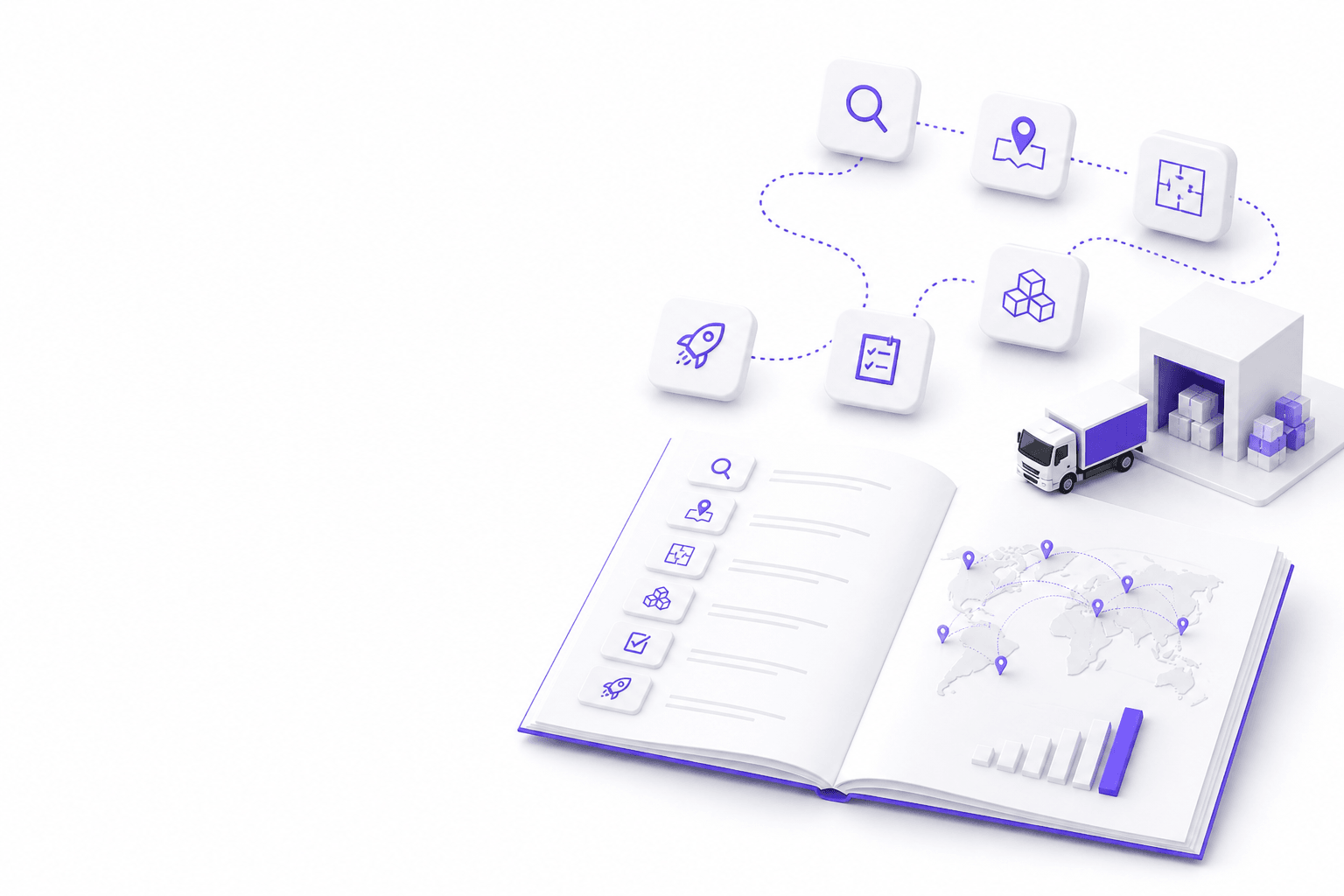
Plan logistics platform software with discovery with logistics teams and workflow mapping, a bounded MVP vertical slice, technical architecture and data model aligned to TMS, WMS, and ERP ownership, integration prototypes on real messages, role-based UI/UX, security and audit requirements, test harnesses for peak scenarios, a phased launch roadmap, and post-launch iteration tied to adoption metrics.
- Discovery and shared artifacts before feature lists
- MVP as one complete workflow from input to outcome
- Integration proof on production-like message samples
- Security, audit, and acceptance criteria designed early
- Phased launch, then iterate on logistics company KPIs
Direct answer
How should teams plan logistics platform software development?
Plan logistics platform software with discovery with logistics teams and workflow mapping, a bounded MVP vertical slice, technical architecture and data model aligned to TMS, WMS, and ERP ownership, integration prototypes on real messages, role-based UI/UX, security and audit requirements, test harnesses for peak scenarios, a phased launch roadmap, and post-launch iteration tied to adoption metrics.
- Discovery and shared artifacts before feature lists
- MVP as one complete workflow from input to outcome
- Integration proof on production-like message samples
- Security, audit, and acceptance criteria designed early
- Phased launch, then iterate on logistics company KPIs
Why planning matters
Software development planning for logistics platforms matters because products fail when planning stops at wireframes while integrations, data ownership, and exception handling remain undefined. Logistics companies revert to spreadsheets; customer portals show stale status; automation quarantines half of incoming messages without clear owners.
Structured planning connects software development to outcomes, reduced manual handling, faster exception resolution, reliable self service, and sequences work around peak seasons and integration capacity.
- Start with discovery with logistics teams and shared artifacts, not feature lists or wireframes alone
- Map each priority workflow from trigger to outcome, including TMS, WMS, ERP, and failure modes
- Scope MVP as one complete vertical slice with an explicit out-of-scope list
- Prototype the riskiest integration path on production-like samples before committing timelines
- Design security, audit, and acceptance criteria early; launch in pilot → cutover → general availability
- After launch, assign owners for sync health and iterate against operational KPIs, not only feature requests
Discovery
Discovery for logistics platform planning interviews dispatch, warehouse, customer service, finance, and IT about how work flows today: inboxes, TMS screens, WMS tasks, EDI exceptions, and spreadsheet bridges. Quantify manual steps and error rework where possible without inventing statistics, use samples and time studies from willing teams.
Discovery outputs include workflow owners, system inventory, pain-ranked backlog, and constraints such as carrier file delays, upgrade freezes, and regulatory requirements. Discovery is not a sales phase; it should produce shared artifacts both business and engineering can reference.
Workflow mapping
Workflow mapping for logistics software planning traces each priority workflow from trigger to outcome: booking email to TMS record, ship confirm to customer notification, invoice line to payment approval. Note decision points, human approvals, and system writes.
Swimlanes by role reveal where software should not duplicate TMS or WMS responsibilities, and where custom layers add differentiation: portals, towers, automation, partner collaboration.
- Trigger events and expected outputs per workflow
- Human vs automated steps with escalation paths
- Systems touched: TMS, WMS, ERP, CRM, carrier feeds
- Failure modes: missing refs, duplicates, partial data
MVP scope
MVP scope for a logistics platform means one vertical slice complete end to end. Not half a portal plus half an integration. Example: customer visibility and document download for one account tier on one region, fed by live TMS milestones with documented freshness limits.
After that MVP slice is defined, defer adjacent modules until adoption and sync health are proven. An explicit out-of-scope list prevents scope creep during build.
Technical architecture
Technical architecture for logistics platforms should reflect integration latency, write volume, and team skills: monolith vs services, event bus vs point sync, operational store vs warehouse for analytics. Logistics platforms often start pragmatically: API layer, integration workers, web app, and observability before microservice sprawl.
Document non-functional requirements: uptime expectations, RPO/RTO, peak multipliers, and deployment windows that avoid warehouse cut-off conflicts.
Data model
A logistics platform data model should define entities and ownership: shipment, order line, inventory bucket, party, document, charge, exception, task. Align identifiers with TMS and WMS where possible; document transforms when internal IDs differ.
Plan audit fields, who changed status, when, from which source, for disputes and compliance. Avoid shadow master data without reconciliation strategy.
Integrations
Integration planning for logistics platforms lists endpoints, message formats (API, EDI, XML, CSV, SFTP), schedules, validation rules, idempotency keys, and quarantine UX. Prototype highest-risk read/write on production-like samples before committing timelines.
Include monitoring dashboards for sync lag, error rates, and queue depth accessible to workflow owners, not only engineering.
UI/UX planning
UI/UX planning for logistics platforms designs role-first experiences for dispatch, warehouse supervisors, customer service, and external portal users. that puts exceptions first layouts beat generic dashboards when the product goal is action.
Plan empty states, error states, and mobile needs for floor or yard use where relevant. Localization and RTL requirements should surface early if you serve multiple markets.
Security
Security planning for logistics platforms covers authentication (SSO, MFA), authorization by account and role, encryption in transit and at rest, secrets management, audit logs, and data retention. Partner and customer portals need separate threat modeling from internal apps.
Align with customer RFP and regulatory expectations before build; retrofitting controls delays launch.
Testing
Testing for logistics platform software includes unit and integration tests, message fixture libraries, peak-load scenarios, failover drills, and user acceptance with logistics companies on real cases. Logistics software needs regression on integration mappings when TMS or WMS vendors release updates.
Define acceptance criteria per MVP workflow. Not only screen completion, including sync accuracy and handling-time improvement targets agreed with operations.
Launch roadmap
A logistics platform launch roadmap phases delivery: pilot cohort, monitored cutover, then general availability, with rollback paths and manual fallback documented. Avoid big-bang launch before holiday peak without rehearsal.
Runbooks cover who responds to sync failures, how to disable automation agents, and customer communication if status delays occur.
Pilot cohort
Limited accounts or lanes with daily sync review and feedback from logistics teams loop.
Hardening
Fix quarantine patterns, tune notifications, complete training materials.
Controlled cutover
Expand region or segment with milestone checkpoint and rollback trigger criteria.
General availability
Broader rollout once adoption and error rates meet agreed thresholds.
Post-launch iterations
Post-launch iteration planning for logistics platforms assigns owners for integration health, prompt and model updates for AI features, and backlog grooming from feedback from logistics teams. Iterations should tie to KPIs such as email volume, quarantine rate, and task closure time. Not only stakeholder feature requests.
Schedule post-peak retrospectives to capture what broke under volume and feed the next roadmap phase.
Implementation
Practical implementation checklist
- Complete discovery artifacts with named owners
- Map top workflows with systems and writes
- Define MVP slice and explicit out-of-scope
- Prototype riskiest integration path
- Document data model and audit requirements
- Publish launch runbook and rollback paths
- Assign post-launch owners for sync and support
Pitfalls
Common mistakes to avoid
Wireframes before workflow truth
UI plans without integration and exception design produce demos logistics companies abandon.
MVP that is horizontal but incomplete
Thin modules across many workflows help no single team on Monday morning.
No logistics company acceptance criteria
Shipping on engineering checklists alone misses adoption and data quality goals.
FAQ
Frequently asked questions
What is software development planning for logistics platforms?
Structured discovery, workflow mapping, architecture, and phased delivery planning so logistics software ships as adoptable workflows integrated with TMS, WMS, and ERP. Not disconnected features.
How long should discovery take?
Enough to map priority workflows, systems, and integration samples with logistics company input, typically weeks, not a single workshop, for non-trivial platforms.
What belongs in an MVP?
One complete workflow from input to measurable outcome for a bounded user group, with integrations, exceptions, and support paths production-ready.
Can 4RTY help plan logistics platform development?
Yes. 4RTY runs discovery and software development planning for logistics platforms, architecture, integrations, MVP scope, and launch roadmaps aligned to operations.
Related services
Service
Logistics Software Development
Build custom logistics software, portals, dashboards and TMS/WMS/ERP integrations for modern transport, warehouse and supply-chain teams.
Service
TMS and WMS Integration Services
4RTY connects logistics systems, portals, dashboards and workflows through practical TMS, WMS, ERP, API and file-based integrations.
Related solutions
Solution
Logistics Control Tower Dashboard Development
4RTY builds logistics control tower dashboards combining network visibility, exception prioritization, assignment workflows and decision support for ops leaders.
Solution
TMS, WMS and ERP Integration for Logistics Operations
4RTY builds TMS, WMS and ERP integrations for logistics operations, synchronizing orders, inventory, shipments, milestones and finance data across operational systems.
Related guides
Guide
How to Roadmap Logistics Software That Ships
A practical framework for logistics software roadmaps, outcome-based prioritization, discovery with logistics teams, integration reality checks, vertical slices, milestones and governance that keeps products shipping.
Guide
What Is Logistics Software Development? | 4RTY
Learn how logistics software supports transport, warehousing, portals, dashboards, TMS/WMS/ERP integrations, automation and AI workflows.
Guide
Logistics Software Development Cost | 4RTY
Understand what affects logistics software cost: integrations, portals, roles, dashboards, AI features, migration, security and scope.